Matt Thomas - 2nd Year Design for Games student at Plymouth College of Art
Saturday, April 27, 2013
[UPDATE] - Time-Lapses are go.
Hallelujah!
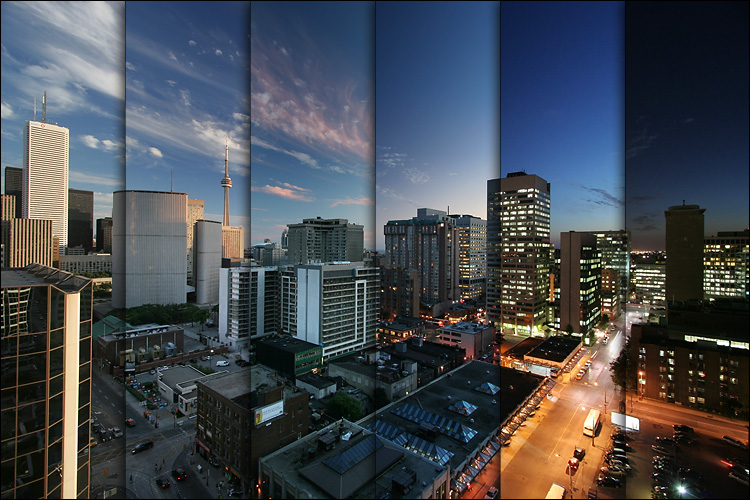
Though we have yet to settle on an exact structure for our showreel, it has been decided that we will be using time-lapse footage.
After having clarified this i went with Wayne to see if the equipment tis available o us, the answer came back surprisingly quickly: Yes.
They have everything we needed bar the one piece that i was expecting more than anything else not to be there, the dolly and motor. Or, more specifically, the motor, apparently there are dollys that can be used (with special permission) but no motors for those delectable panning shots i was hoping to get. Still, i came away very happy that we will be able to get the time-lapse footage we need.
Despite lacking a proper plan for our showreel we still decided on a few time-lapses we wished to include:
- Sunrise/Sunset over college on a clear/very sunny day
- Footage of classroom filling in the morning
- Over-the-shoulder footage of a student working on something (undecided as of yet)
I am both very excited and dreading the prospect of creating these time-lapses, though the dread stems only from the 'Sunrise' footage which will require a very early start for myself and Wayne!
Sunday, April 21, 2013
Market Research - Showreels
We were asked to do some market research into other showreels for courses similar to ours, so the first thing i did was go to YouTube and search for "Game Design Course Showreel", below is the first video that popped up as a result:
Swansea Institute Games Design Showreel 2007
This showreel focusses solely on gameplay footage, something we should definitely avoid, not least because the majority of the work that we can showcase isn't in game! I found it to be a tad confusing at times and the video looks quite dated but then again it is from 2007, on top of this i felt the music didn't really fit with the video.
So, with the belief that a more recent showreel might be slightly better, I added "2012" to the search, which lead me to the videos i have summarised below:
Student Showreel 2012 - Wakefield College
This video demonstrated a distinct style, featuring the logo you see above which appears in the bottom corner of all the footage as a watermark, a nice touch. It immediately starts playing The Prodigy's 'Invaders Must Die' which is a good choice as it has a nice build up. The footage reflects this buildup before performing several satisfying video jumps in time with the music. The first part of the video consists of level fly-throughs that are all filmed very well in-game using some sort of path-based 'dolly' system i am unfamiliar with. It gives a very professional look to everything.
After this section, and again in fitting with the music the video switches to showcasing particular areas such as artwork and 3D renders using a mixture of stills and videos, the switch comes just as the music reaches a break which i find to be a particularly nice touch.
Overall it adheres to the notion that showreels must present the best/most impressive work at the start of a video.
BA Game Art - Show Reel 2012 - St Helens College
This video is more of a showcase of work than the last video, it's simply a slideshow of images appearing under various titles such as Environment, Vehichles, Character, etc. There are no moving images, perhaps this was deliberate so that the still artwork didn't stand out by comparison as it did in the Wakefield College showreel. The music wasn't really tied to what was happening on screen but provided a constant soundtrack that complemented the video overall.
I feel like this video is not something we should be aiming for, i would like our showreel to be exciting whilst also showing some great work.
The main thing i noticed in all of these videos is that none of them show the actual premises in which their respective courses take place. I can either take this as a sign that any such footage is unnecessary, or that i have an opportunity to do something original on my hands! My instinct tells me its most likely the former reason but i would certainly still like to try and make it work with the time-lapses if i can, my assumption is that it would need to be worked into the theme of the video.
Swansea Institute Games Design Showreel 2007
This showreel focusses solely on gameplay footage, something we should definitely avoid, not least because the majority of the work that we can showcase isn't in game! I found it to be a tad confusing at times and the video looks quite dated but then again it is from 2007, on top of this i felt the music didn't really fit with the video.
So, with the belief that a more recent showreel might be slightly better, I added "2012" to the search, which lead me to the videos i have summarised below:
Student Showreel 2012 - Wakefield College
This video demonstrated a distinct style, featuring the logo you see above which appears in the bottom corner of all the footage as a watermark, a nice touch. It immediately starts playing The Prodigy's 'Invaders Must Die' which is a good choice as it has a nice build up. The footage reflects this buildup before performing several satisfying video jumps in time with the music. The first part of the video consists of level fly-throughs that are all filmed very well in-game using some sort of path-based 'dolly' system i am unfamiliar with. It gives a very professional look to everything.
After this section, and again in fitting with the music the video switches to showcasing particular areas such as artwork and 3D renders using a mixture of stills and videos, the switch comes just as the music reaches a break which i find to be a particularly nice touch.
Overall it adheres to the notion that showreels must present the best/most impressive work at the start of a video.
BA Game Art - Show Reel 2012 - St Helens College
This video is more of a showcase of work than the last video, it's simply a slideshow of images appearing under various titles such as Environment, Vehichles, Character, etc. There are no moving images, perhaps this was deliberate so that the still artwork didn't stand out by comparison as it did in the Wakefield College showreel. The music wasn't really tied to what was happening on screen but provided a constant soundtrack that complemented the video overall.
I feel like this video is not something we should be aiming for, i would like our showreel to be exciting whilst also showing some great work.
University of Bolton - Games Showreel 2012
This showreel is far shorter than the other video's i've watched, in some cases this may be a better timeframe to use as it presents a more manageable chunk of video for the viewer to digest. The videos style seems very professional but much like the last video i find it rather... subdued. It's layout and theme are great, and the actual footage they are showcasing is fantastic, but the weak soundtrack that is again completely disconnected from the footage doesn't really draw you in as much as i think it should.The main thing i noticed in all of these videos is that none of them show the actual premises in which their respective courses take place. I can either take this as a sign that any such footage is unnecessary, or that i have an opportunity to do something original on my hands! My instinct tells me its most likely the former reason but i would certainly still like to try and make it work with the time-lapses if i can, my assumption is that it would need to be worked into the theme of the video.
Saturday, April 20, 2013
Research - Time-Lapse Video Creation
Having been assigned our job roles last week, with one of mine being Cinematographer, I decided to spend some time looking into the area of time-lapse videos as i coined the idea of including a few in our showreel, just to break it up.
Some idea's for time-lapse segments we've had are:
There are plenty more interesting shot's we could get of the college though of course we don't want to include too much that deviates from the main aspect of showing off great work from the course.
So, after having these idea's i had a look into how time-lapse videos are created. The most prominent method is to use a dSLR camera, this is due to their higher output quality and greater level of control as opposed to more basic cameras available.
On top of this you need an interval timer, unless the camera has an interval function built in. An interval timer is just what it sounds like, a device that will automatically take photographs at regular intervals defined by you. Apparently it is also possible to have the camera connected to a laptop or other device that is running interval timing software.
These two items are supposedly all you need. It's how a time-lapse video is created, you obtain a series of images taken at regular intervals over a period of time, after which you can use a variety of digital software packages to combine the sequence into a 24-30 Frame-Per-Second video, put a fitting music track over the top and BAM, you have yourself a time-lapse video.
However there are some other item's that will be required if you want to create something good or at the very least, steady:
- A Tripod
An obvious inclusion, but the tripod will allow for a steady stationary shot. Care must be taken to make sure the camera isn't knocked or moved during the capturing stage so it's recommended to keep a close eye on the camer during this time.
- Multiple Batteries
Some time-lapse shots take a long time to create, and the camera will be running for the duration so it is advised that you bring multiple batteries that can be swapped out between shots. Wayne, who i will be working with to create these time-lapses, pointed out that it may also be possible to obtain an AC adapter for the camera, this will mean no battery changes but is most likely only feasible for the indoor shots.
- Multiple/Large Memory Cards
If the images that are being captured are of a high resolution, memory is of course going to be an issue. Time-lapse video's require hundreds and sometimes thousands of images to be captured, so we may well need to carry multiple cards, though if we can obtain a memory card with a particularly high capacity, we should be ok, even for the longest time-lapse.
- Planning
I believe we will be discussing whether time-lapse shots will even be needed during next weeks session, but if we do we will need to do some pre-planning before getting the shots. It's advised that you take some test shots to make sure you get an angle you're happy with. You can also do some simple math to work out the interval timing, number of shots, and the final duration of your time-lapse segment, this can all be very useful to know in advance.
As mentioned earlier, once you have all the images you need, it's just a case of using digital software to assemble them into a video. I'm assuming this will be the easiest part, at least for me, i am unfamiliar with fancy photography, but using PhotoShop to create a video? Simple!
As an addition i would like to say that when envisaging the indoor time-lapse of T1.2, i see it panning from left to right. I have looked into the creation of moving time-lapses and whilst they require extra equipment like dollys, extra tripods, and motors, i still think its doable in the time we have.
But despite all this there is one potential problem: We are limited to whatever equipment is available to us. It is entirely possible that we may not have access to the equipment we need to make these time-lapse video's, at least not for a long duration. I have a feeling the equipment we would need for a moving shot is even less likely to be available.
However, we will find out soon enough, tomorrow i plan to go and find out how much of this stuff is available to us as it is important to know what we can achieve before we start planning the showreel.
Links:
How to Make a Time-Lapse Video: The Ultimate Guide
Creating a Time-Lapse Video in PhotoShop
Moving Time-Lapse Photography Tutorial
Some idea's for time-lapse segments we've had are:
- An outside shot of the front of the College over the course of a sunny day
- Video of the main Design for Games classroom T1.2 over the course of either a single lecture, or throughout a day
- Video of a student at a computer, creating something: a 3D model, a PhotoShop image, a ZBrush sculpture, game coding, anything which show's an interesting part of the game creation process
There are plenty more interesting shot's we could get of the college though of course we don't want to include too much that deviates from the main aspect of showing off great work from the course.
So, after having these idea's i had a look into how time-lapse videos are created. The most prominent method is to use a dSLR camera, this is due to their higher output quality and greater level of control as opposed to more basic cameras available.
On top of this you need an interval timer, unless the camera has an interval function built in. An interval timer is just what it sounds like, a device that will automatically take photographs at regular intervals defined by you. Apparently it is also possible to have the camera connected to a laptop or other device that is running interval timing software.
These two items are supposedly all you need. It's how a time-lapse video is created, you obtain a series of images taken at regular intervals over a period of time, after which you can use a variety of digital software packages to combine the sequence into a 24-30 Frame-Per-Second video, put a fitting music track over the top and BAM, you have yourself a time-lapse video.
However there are some other item's that will be required if you want to create something good or at the very least, steady:
- A Tripod
An obvious inclusion, but the tripod will allow for a steady stationary shot. Care must be taken to make sure the camera isn't knocked or moved during the capturing stage so it's recommended to keep a close eye on the camer during this time.
- Multiple Batteries
Some time-lapse shots take a long time to create, and the camera will be running for the duration so it is advised that you bring multiple batteries that can be swapped out between shots. Wayne, who i will be working with to create these time-lapses, pointed out that it may also be possible to obtain an AC adapter for the camera, this will mean no battery changes but is most likely only feasible for the indoor shots.
- Multiple/Large Memory Cards
If the images that are being captured are of a high resolution, memory is of course going to be an issue. Time-lapse video's require hundreds and sometimes thousands of images to be captured, so we may well need to carry multiple cards, though if we can obtain a memory card with a particularly high capacity, we should be ok, even for the longest time-lapse.
- Planning
I believe we will be discussing whether time-lapse shots will even be needed during next weeks session, but if we do we will need to do some pre-planning before getting the shots. It's advised that you take some test shots to make sure you get an angle you're happy with. You can also do some simple math to work out the interval timing, number of shots, and the final duration of your time-lapse segment, this can all be very useful to know in advance.
As mentioned earlier, once you have all the images you need, it's just a case of using digital software to assemble them into a video. I'm assuming this will be the easiest part, at least for me, i am unfamiliar with fancy photography, but using PhotoShop to create a video? Simple!
As an addition i would like to say that when envisaging the indoor time-lapse of T1.2, i see it panning from left to right. I have looked into the creation of moving time-lapses and whilst they require extra equipment like dollys, extra tripods, and motors, i still think its doable in the time we have.
But despite all this there is one potential problem: We are limited to whatever equipment is available to us. It is entirely possible that we may not have access to the equipment we need to make these time-lapse video's, at least not for a long duration. I have a feeling the equipment we would need for a moving shot is even less likely to be available.
However, we will find out soon enough, tomorrow i plan to go and find out how much of this stuff is available to us as it is important to know what we can achieve before we start planning the showreel.
Links:
How to Make a Time-Lapse Video: The Ultimate Guide
Creating a Time-Lapse Video in PhotoShop
Moving Time-Lapse Photography Tutorial
Tuesday, April 16, 2013
SWOT Analysis and Skills Audit
After deciding our job roles we were asked to perform individual SWOT analyses. Here is mine:
SWOT analysis!!!:
Strengths:
- Problem Solving
- Idea Generation
- Research
- Supporting others
Weaknesses:
- Communication
- Time-management
- Concentration
- Self-belief
- Photography
- Time-Lapse Creation
Opportunities:
- Improve Communication by working in a team, discussing ideas, etc.
- Improve Time-management by focussing on meeting deadlines
- Gain new skills and abilities
- Gain confidence of own abilities
Threats:
- Team mates not getting work done
- Poor communication between team members
- Inability to obtain desired material
- Inability to obtain satisfying material
Skills Audit
The purpose of the Skills audit is to take the strengths and weaknesses mentioned in the SWOT analysis and give a more accurate reading of how big of a strength or weakness each of these areas are. The numbers are on a scale of 1 to 5, with 5 being the highest competency and 1 being the lowest.
SWOT analysis!!!:
Strengths:
- Problem Solving
- Idea Generation
- Research
- Supporting others
Weaknesses:
- Communication
- Time-management
- Concentration
- Self-belief
- Photography
- Time-Lapse Creation
Opportunities:
- Improve Communication by working in a team, discussing ideas, etc.
- Improve Time-management by focussing on meeting deadlines
- Gain new skills and abilities
- Gain confidence of own abilities
Threats:
- Team mates not getting work done
- Poor communication between team members
- Inability to obtain desired material
- Inability to obtain satisfying material
Skills Audit
The purpose of the Skills audit is to take the strengths and weaknesses mentioned in the SWOT analysis and give a more accurate reading of how big of a strength or weakness each of these areas are. The numbers are on a scale of 1 to 5, with 5 being the highest competency and 1 being the lowest.
|
Skills
|
Evaluation:
Project Start
|
|
Research
|
5
|
|
Problem Solving
|
4
|
|
Supporting Others
|
4
|
|
Idea Generation
|
3
|
|
Communication
|
2
|
|
Self-Belief
|
2
|
|
Concentration
|
2
|
|
Time Management
|
1
|
|
Photography
|
1
|
|
Time-Lapse Creation
|
1
|
Monday, April 15, 2013
Research - Desired Job Roles
Today we began by looking into job roles as they're essential to progressing onto the planning and eventual production stage smoothly. We agreed that it'd be good for us all to go away and look into the roles we most wanted to take. Here are mine:
Director
As i understand it right now our showreel may require some filming so i would like to be a director for these parts. A directors job is exactly what it says on the tin: they pick and choose what will be happening in the scene they are trying to create, how it will be filmed, timing, everything.
Producer
I would also like to be the producer for the scene i am directing. Producers can perform a number of roles such as managing fund-raising, budgeting and hiring, but in my example i am looking at the role of producer in a purely production sense.
These are the two roles i managed to look into in the time given, after this we regrouped and decided as a team who would be doing what. I was very happy with my positions:
Researcher
Everyone is a researcher because we will all be looking into how showreels are made, seeing examples, learning from them and pooling our impressions to generate ideas.
Lead Camera Operator
I have discussed the idea of including filmed segments for our showreel and it was agreed that I, working with Wayne, could create these filmed segments
Cinematographer
This basically relates back to the previous job role, but differs in that the title refers to the one who chooses the best shot to use when filming.
Director
Together with Dean, i will be deciding how our showreel will go, choosing the sequence of everything within, and the overall theme, we felt it was best to have more than one person working in this role so all idea's could be scrutinised before being given the go ahead.
Below you can see the entire finalised job roles for our group:
Members and Job roles
Patrick Sweeting: Researcher, Film Editor, Composer, Production Manager
Dean Stone: Researcher, Asset Collection, Story boarding, Director
Wayne Ramsay: Researcher, Broadcast designer, Assistant Camera Operator
Matt Thomas: Researcher, Lead Camera Operator, Cinematographer. Director
Helen Folland: Researcher, Asset Creation, Director of Photography
Monday, April 8, 2013
C'est Commence
Today we began our second Work Based Learning module. Last year, in our first WBL module, we were taught some useful skills for working professionally. This year we are to put those skills to use. We will be working in groups to create a promotional show reel for our course, during which we will be expected to demonstrate a professional attitude towards the project, right down to attending all lectures on time, as you would be expected to in a job role. If our work is deemed worthy the College will take our work and use it for real marketing purposes.
After being introduced to the brief for the module, we were asked to form groups of 4 people with whom we will be working for the duration. This was relatively easy and i feel the group i am in will work very well together, a fact demonstrated by our immediate jump into some preliminary research.
We started by looking at some well known game trailers to see how they were presented, focussing on the different shots, the content and the music, the reason behind this was that we were thinking of going for a video game style trailer for our show reel. After this we moved on to looking at some show reels, concluding that the fundamentals of a show reel are high quality content, good flow, and a well matched soundtrack. Whether we can adapt this to a video game trailer style remains to be seen, i'm a tad skeptical as i feel this may stray to far from the show reel formula, but at the same time i would love it if we could as we all have some great ideas.
After being introduced to the brief for the module, we were asked to form groups of 4 people with whom we will be working for the duration. This was relatively easy and i feel the group i am in will work very well together, a fact demonstrated by our immediate jump into some preliminary research.
We started by looking at some well known game trailers to see how they were presented, focussing on the different shots, the content and the music, the reason behind this was that we were thinking of going for a video game style trailer for our show reel. After this we moved on to looking at some show reels, concluding that the fundamentals of a show reel are high quality content, good flow, and a well matched soundtrack. Whether we can adapt this to a video game trailer style remains to be seen, i'm a tad skeptical as i feel this may stray to far from the show reel formula, but at the same time i would love it if we could as we all have some great ideas.
Subscribe to:
Posts (Atom)